
Weeding Thoughts: Hunt for Quiet
What does quiet look like in today’s world?
My quiet starts at 6:00am with brushing teeth, whirring of the coffee machine, and the shake of pet food into bowls, accompanied by my ‘Clean Girl Slow R&B Tuesday Morning’ Spotify mix. While I walk to my car I will spend time searching for the next auditory stimulant that will narrate my day. This pattern of filling the quiet with noise continues throughout my day. Every possible second of my life made to go by faster with the hum of background noise. Even the drive to work: A/C is blasting in your face, music turned almost all the way up, other vehicles around you honking, lawn mowers groaning in the distance, maybe a siren passes by. On it goes, the constant sound, all day long.

Is the auditory input actually beneficial?
In her book, “Turn Down the Noise: A Practical Guide to Building an Emotionally Healthy Family in a Chronically Overstimulated World,” Sarah Boyd dives into what exactly this excess of noise means for our overall health. “Noise pollution is so harmful because our brains interpret loud noise as a threat,” Boyd writes. “Even when we logically understand that the noise we’re hearing isn’t dangerous, it still unconsciously inundates our nervous system with low-grade stress.” Suddenly a ‘quiet’ morning is turned into our nervous system preparing us for misinterpreted threats. We have become so accustomed to the growing rattle of the world around us, adapting to operating at a baseline of low grade stress.

Other ways to counteract the negative effects of unwanted auditory input.
The hum of traffic can be decreased by moving to more rural areas, replaced with kids playing, water rushing past, or wildlife in the distance. In 2013 a group of university students in Auckland, New Zealand studied the differences between these two varying soundscapes and how it impacts one’s health-related quality of life. Not only was there less stress and annoyance in smaller communities, but the decrease of volume increased individuals’ ability for restorative rest.
There are, however, some things that will be out of our control, even in rural areas. For example, industrial plants being installed and disrupting the “listening radius,” a notion explained in the study as the sounds around one’s home making them feel connected to their community. A community tied together by overhearing your neighbor’s kids running around or someone’s rooster crowing in the morning. “As the listening radius collapses, individuals come to exist in a smaller-and-smaller bubble, isolated within their homes, and relying upon televisions or radiograms to mask the unwanted sounds dominating outside.”
What was once an escape to a quieter life, has now been infiltrated by the buzz of incessant background chatter.
So, how do we find true quiet in a world filled with noise?
Acoustic ecologist, Gordon Hempton, stated that “silence is an endangered species on the verge of extinction.” Peace and quiet is an idea, maybe a place, that we must create and advocate for ourselves.

My quiet place is in the garden. The act of sitting completely alone with my thoughts made easier by partaking in weed…ing. Every weed is pulled, dirt shaken out and flipped root side up. Placed next to cabbage, carrots, or cucumbers with enough room to let the plant continue to grow. They will, hopefully, block more weeds from coming up and provide extra nutrients for the soil once broken down. It is methodical, almost meditative, giving my hands sensory input rather than my brain.
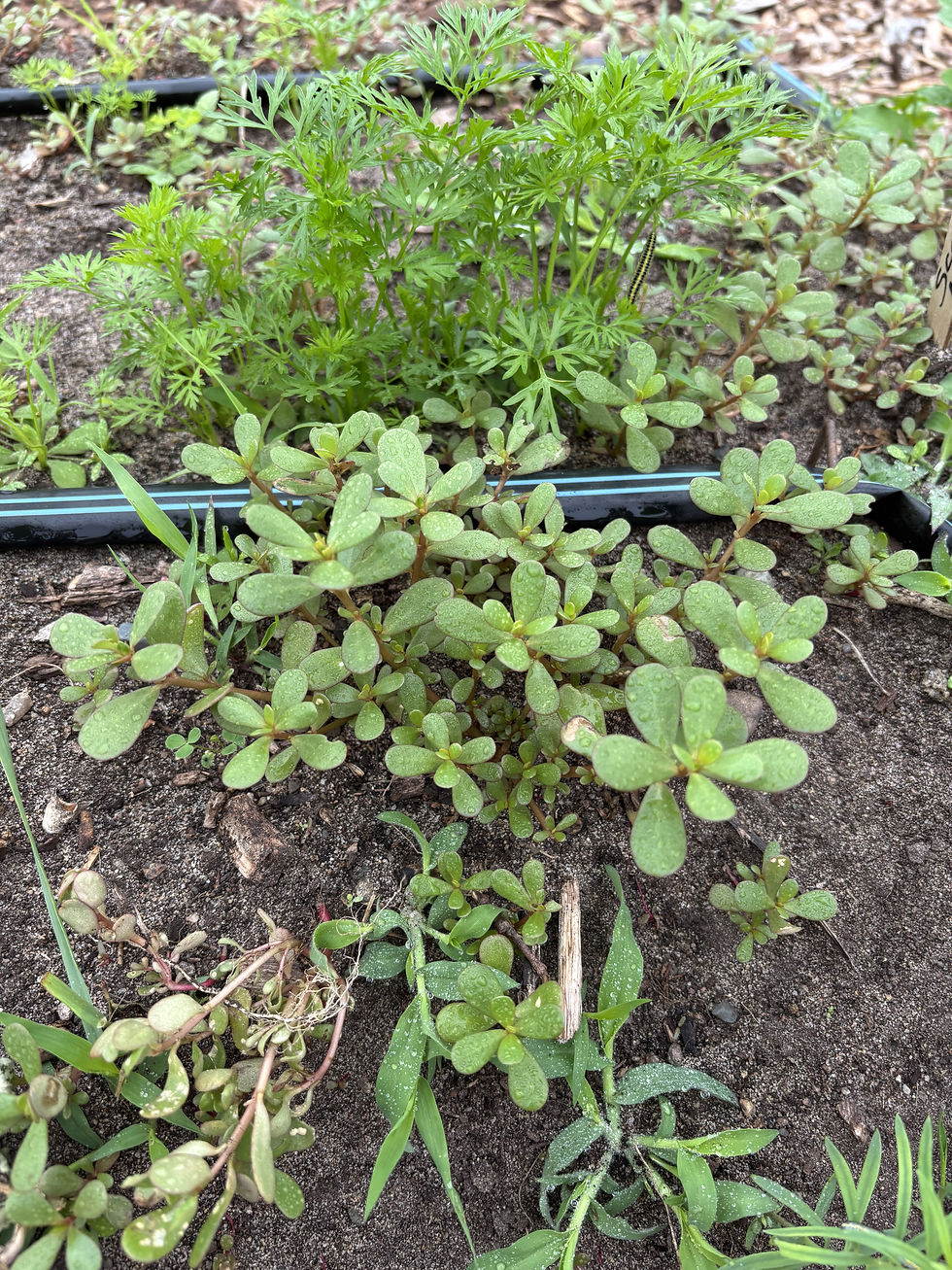
Dandelion pulled, shaken, flipped. Goat’s Beard pulled, shaken, flipped. I wonder what ants do in their bedrooms. Lambs quarter pulled, shaken, flipped. Quack grass pulled, shaken, and flipped over my shoulder into the annoyingly invasive pile. How many microbes are on my skin right now? Purslane pulled, shaken, flipped. Another dandelion pulled, shaken, flipped. What do I do if I find a bone? More quack grass. A thistle. Does this one look more like my ex boyfriend from high school or college?

Five silly, seemingly useless, thoughts for each weed dug out and rearranged. I let them run free, take root, and make a space that is free of music, a youtube video, or some random podcast put on in the background.
Bent down in the earth, I can slowly push on each part of my brain otherwise clouded by incessant noise. Simply pulling out weeds gives my mind the freedom to come alive. The world around me becomes a conduit for creativity. Golden, bright, and dirt caked. Completely opposite from the icy blue planet lurking in my phone.
Why not ask silly, nonsensical questions?
Why not prioritize passion and creativity?
We will stop drowning out our thoughts. Whether they are scary, creative, all-consuming, or whatever else, they will not be replaced with background noise just to make time go faster.
Or maybe that’s just the weeds talking…
Sources
Shepherd, Daniel, et al. "Do quiet areas afford greater health-related quality of life than noisy areas?." International journal of environmental research and public health 10.4 (2013): 1284-1303.
This blog was written by Isabel Bundy, HDT’s 2026 summer garden assistant. Check out Digging Into Wellness to read more about the benefits of spending time with soil.
Want to know more about sustainable living topics, events, and happenings? Sign up for Happy Dancing Turtle’s eNewsletter.

Comments