
Steps for Enjoyable Biking
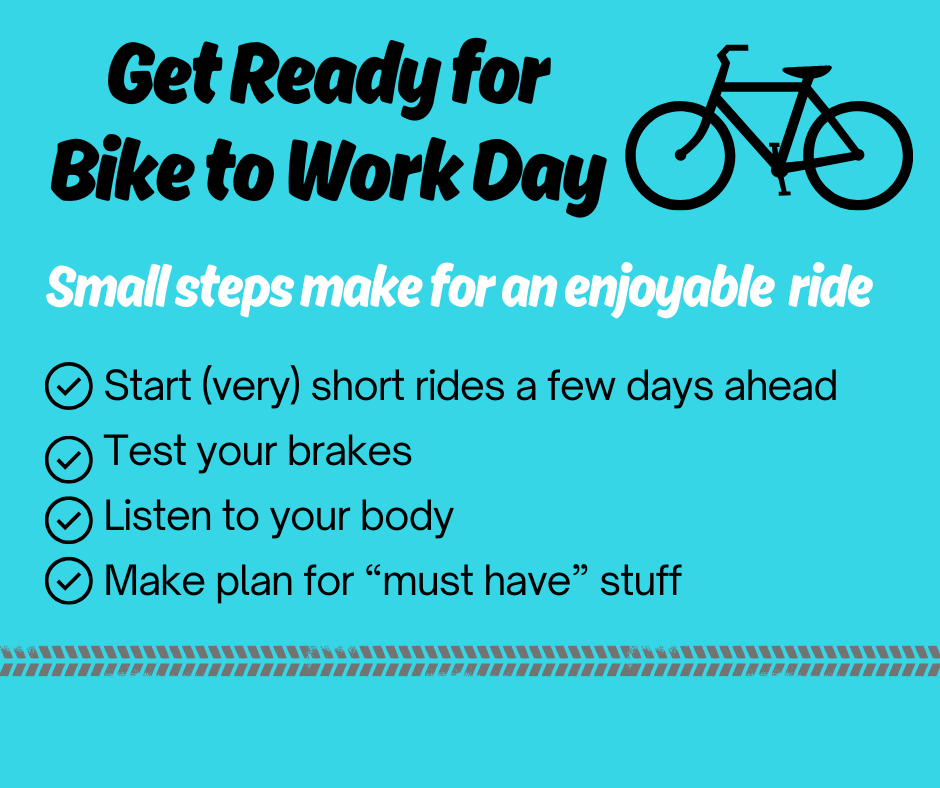
May is National Bike Month and Bike to Work Day is Friday, May 15. Using a bike for regular commuting is not only great exercise, but a great way to see more of your community. But what if regular exercise is not your regular thing? Bike to Work Day may be a great inspiration, but I personally cannot just hop on my bike and ride to work and have it feel great. For me, preparation is key and it starts at no less than the week before.
Get Yourself Ready
I am a regular walker, as described in this blog. Even though I walk during the winter, by spring I am not in the same great shape I had achieved the previous fall while bike riding. Other bikers I know either stay in better shape through winter, or simply accept that start-up of bike season will be a slog.
I don’t like slogs. If my first ride to work of the season feels awful, my motivation to keep riding to work falls off drastically. Maybe at 7 miles round trip, it would not feel like a big commitment to other bikers. But in the spirit of Start Where You Are and Any Exercise Is Better Than the Nothing I Have Been Doing, I celebrate any and all effort. And I have learned that without taking manageable steps, seven miles can feel impossible.
Smallest Possible Steps
It helps that as soon as the temperature is 50 degrees or better, I am excited to get my bike out. I remember all the sweet moments from the previous season, like feeling hyper-focused and wide awake after a cool summer morning ride to work. Or arriving home feeling warmed to the core from the exercise and the summer sun after spending a day in an air-conditioned office.
For my first ride of the season, I keep the bar low–a half-mile to a mile, which doesn’t even really get me out of my neighborhood. And that’s OK. I can test my brakes without endangering myself or others (see “Get Your Bike Ready” in the next section). And when I stop my bike and my hips complain as I get off of it, I say, “Yeah, I hear you guys. It will be easier next time.”
After that first brief ride, I try to ride no less than every other day. The trips might still be short, but at this point, frequency is more important than distance. There is a big hill whether I head east or west from my house, so as long as I break the half-mile barrier, the muscles are getting worked out. After the third outing or so, I make sure to notice that I am no longer huffing and puffing as I reach the top of the hill. It’s a milestone (even though the ride may have been less than a literal mile.)
What I learned minutes before my first bike-to-work adventure a few years ago was that even though I thought I had pared down what I was taking with me to work considerably, it was still too much to fit in my bike’s bags. If you are just trying this bike-riding-thing out, consider planning ahead to haul stuff the day before you bike to work (i.e. lunch/snacks for that day and the next day, spare shoes, or whatever else you simply must have with you).

Clean Up Your Bike
A clean bike extends the life of all the other components, just like a clean car lasts longer. Use a basic biodegradable cleaner like “Simple Green” and take a towel and toothbrush to clean everything from handlebars to back tires. Make sure to use as little water as possible to help avoid rusting. Also, don’t forget to get under the seat!
Inspect the Brake System:
Brakes are probably the most important safety feature on your hog, so be extra diligent with them. Being able to brake as necessary is the key in avoiding accidents. A poor braking system could lead to loss of control while riding, which is what you want to avoid (trying to stay upright and everything!), so be thorough. First, check the brake pads (the rectangular component that actually rubs against the metal part of the tire. These wear down after use, so they should be reassessed every year. If you notice a ridge or another uneven wear pattern, you may want them adjusted and should be replaced if they’re worn down too thin. Next, squeeze your brake on the handle. Watch if the pads hit the tire rim at the same time. If they don’t you may need to adjust them via the brake arm tension screw (usually near the brake lever arms near the tire). If you think your brakes aren’t up to snuff, bring them into a bike shop to get new ones installed. Don’t ride without properly functioning brakes!
Check Your Wheels:
This is probably the easiest part of the process. Turn your bike upside down and spin the wheels. They should move smoothly, without wobble. A wobbly rim can be fixed with a spoke wrench. However, if you are not sure of what you’re doing, adjusting spokes can lead to more problems if you don’t know what you’re doing. A bike repair shop may be a good first choice.
Check your Tires:
Tires fit around the wheels to protect them. Tires are the source of friction with the ground and can be designed for a variety of surfaces from pavement, dirt, and gravel (if you’re off-roading!) Also, properly functioning tires offer a little shock absorption making for a more comfortable ride. Check for splits, cracks, or tears, most likely along the sides of the tires (where they don’t actually touch the ground.) Riding a tire with cracked sidewalls increases the chance of a flat tire. This is because the inner tube (inside the tire) may bulge through a crack or split exposing it to the ground and road debris. Also, make sure to inspect the tread for wear or uneven surfaces. Since tires are moderately inexpensive, if there’s doubt, best to have it replaced.
Inflate Your Tires:
Try pressing the tire with your thumb. If you can make any kind of dent in the tire, it’s time to add air. Sure, a tire may look fine or maybe you can only press in a little bit. But underinflated tires mean less rollability, less momentum, and more of a slog to move the bike at all.
Repair Locations and Local Shops
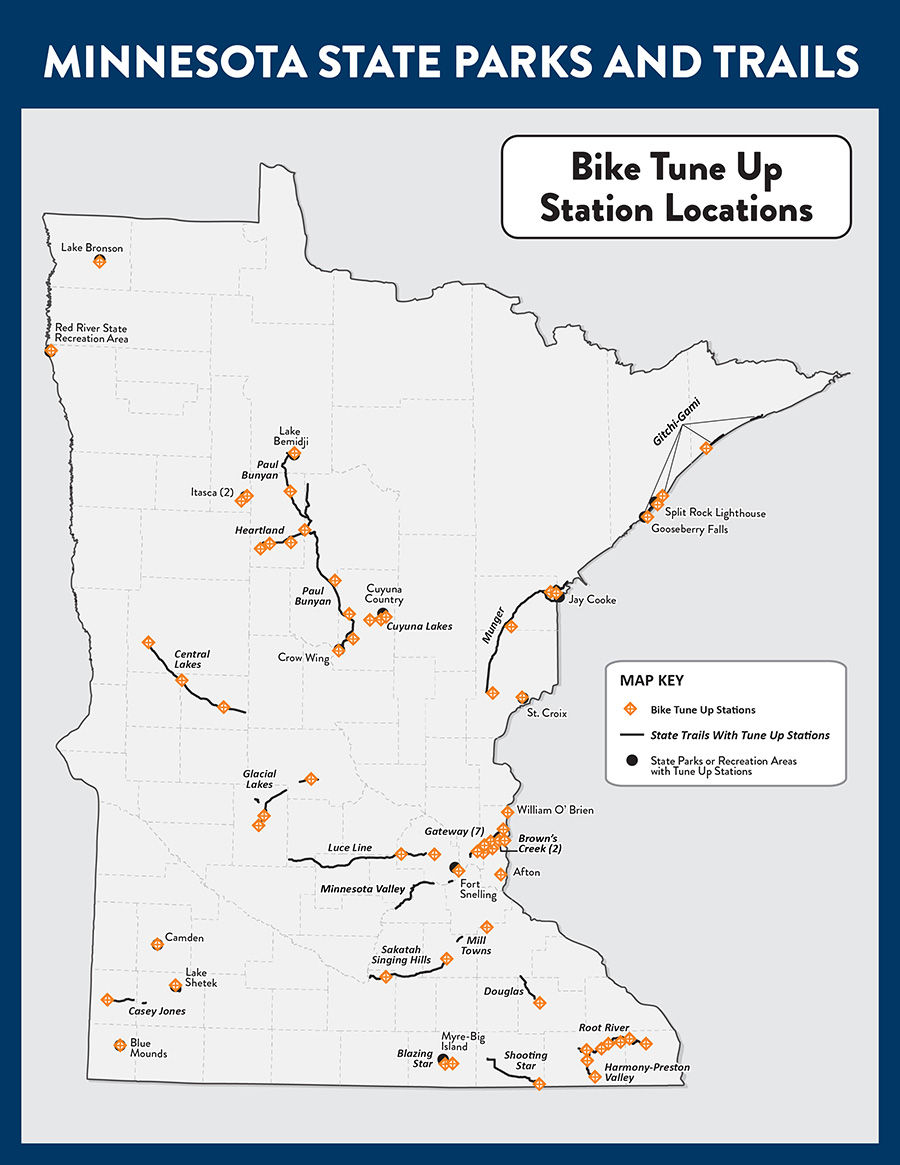
The above map, featured on the Minnesota Department of Natural Resource's website, shows where you will find the handy tune up stations located along the state trail system. Hint: There's one next to the Chamber building, 102 W. Barclay Ave., in Pine River! These tools will keep you on the trail.
Local shops will also help you out! You can’t go wrong with by introducing yourselves to them to get a better picture on how to best maintain your bike.
Kolter Bicycle & Fitness Inc. is one of HDT Driftless staffer Delaney's favorite local bike repair shops: "There's a super sweet gentleman who runs this family business, can fix up bikes and also has plenty of bikes for both adults and kids on stock for sale as well, a lot of it is second-hand hand repaired bikes!"
Although it doesn't have a bike repair station, Delaney also recommends Driftless area bikers check out The Great River State Trail "It is probably my top favorite biking trail in the area, 24 miles on an abandoned railroad line. Passing through refuges, towns, and connecting to other trails as well."
Whether you ride for basic transportation, or pleasure/exercise, keeping up on bike maintenance helps you roll with whatever comes along.
Want to know more about sustainable living topics, events, and happenings? Sign up for Happy Dancing Turtle’s eNewsletter.

Comments